Traditional Irish Soda Bread
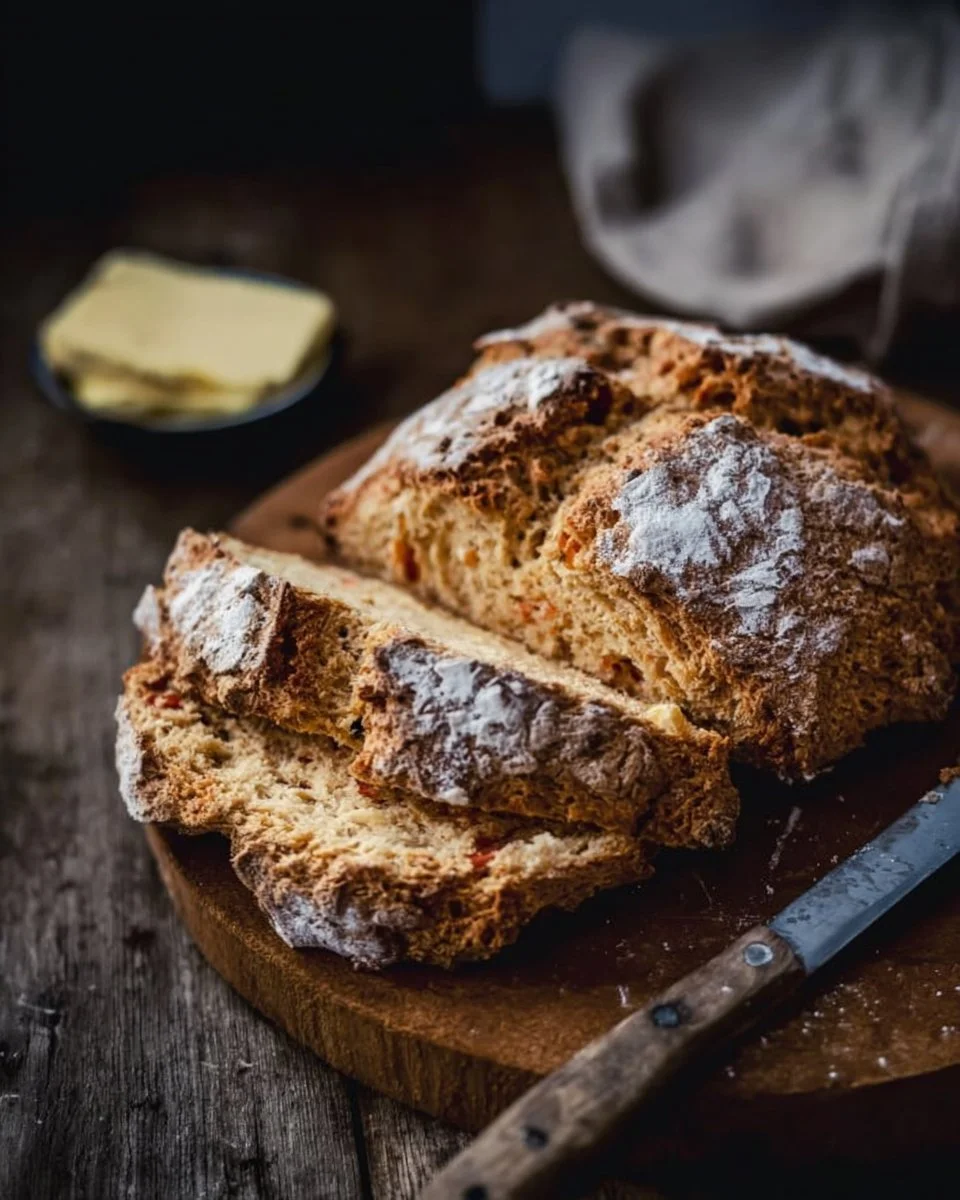
I still remember the first time I pulled a steaming round of soda bread from the oven — the crust cracked with a satisfying snap and the crumb inside was tender and slightly tangy. Traditional Irish soda bread is a simple, yeast-free loaf made with just a few pantry staples. People bake it for St. Patrick’s Day, Sunday brunches, or any time they want warm, rustic bread without the wait. If you enjoy quick rustic loaves, you might also like my take on savory stuffed breads like these cheesy stuffed garlic bread rolls for when you want something gooey alongside your soda bread.
Why you’ll love this dish
This bread is fast, forgiving, and full of character. It uses baking soda and buttermilk instead of yeast, so the whole process — from mixing to oven — takes under an hour. That makes it perfect for last-minute baking, casual dinners with soup or stew, and for home bakers who want the comfort of homemade bread without complex procedures. The exterior crisps up beautifully at the initial high heat, while the interior stays moist and slightly tangy from the buttermilk. It’s budget-friendly, kid-friendly, and reliably delicious even for first-time bakers.
How this recipe comes together
Start by combining the dry ingredients so the baking soda is evenly distributed. Stir in buttermilk until a shaggy mass forms — this dough is wetter than a typical sandwich loaf. Turn it out, give it a few gentle kneads to bring it together, then shape it into a round. Score a deep X on top so steam can escape and the loaf rises evenly. Bake hot to form a crisp crust, then finish at a lower temperature so the center cooks through without burning the exterior. Let it cool so the crumb finishes setting; slicing too soon makes it gummy.
What you’ll need
- 3 1/2 cups unbleached all-purpose flour (420 g)
- 3/4 teaspoon kosher salt (3 g)
- 3/4 teaspoon baking soda
- 1 1/2 cups buttermilk (337 g)
Notes and substitutions:
- If you don’t have buttermilk, stir 1 tablespoon white vinegar or lemon juice into 1 1/2 cups milk and let sit 5–10 minutes to thicken.
- Measure flour by weight for consistent results. Spoon into the cup and level, or better yet, use a scale.
- For a slightly richer loaf, fold in 1–2 tablespoons melted butter before shaping.
Cooking method
- Preheat the oven to 450°F and line a baking sheet with parchment paper.
- In a large bowl, whisk the flour, kosher salt, and baking soda until evenly mixed.
- Make a well in the center of the dry ingredients and pour in the buttermilk.
- Stir gently with a wooden spoon until a shaggy dough forms; don’t overmix.
- Turn the dough onto a lightly floured surface and knead gently four times so it holds together.
- Shape the dough into a round loaf and set it on the prepared baking sheet.
- Use a sharp knife to cut a large X into the top to let steam escape and help the loaf rise.
- Bake at 450°F for 15 minutes. Reduce the oven temperature to 400°F and continue baking for 25–30 minutes, until the crust is golden brown and the loaf sounds hollow when tapped.
- Remove from the oven and cool on a wire rack for at least 20 minutes before slicing.
Best ways to enjoy it
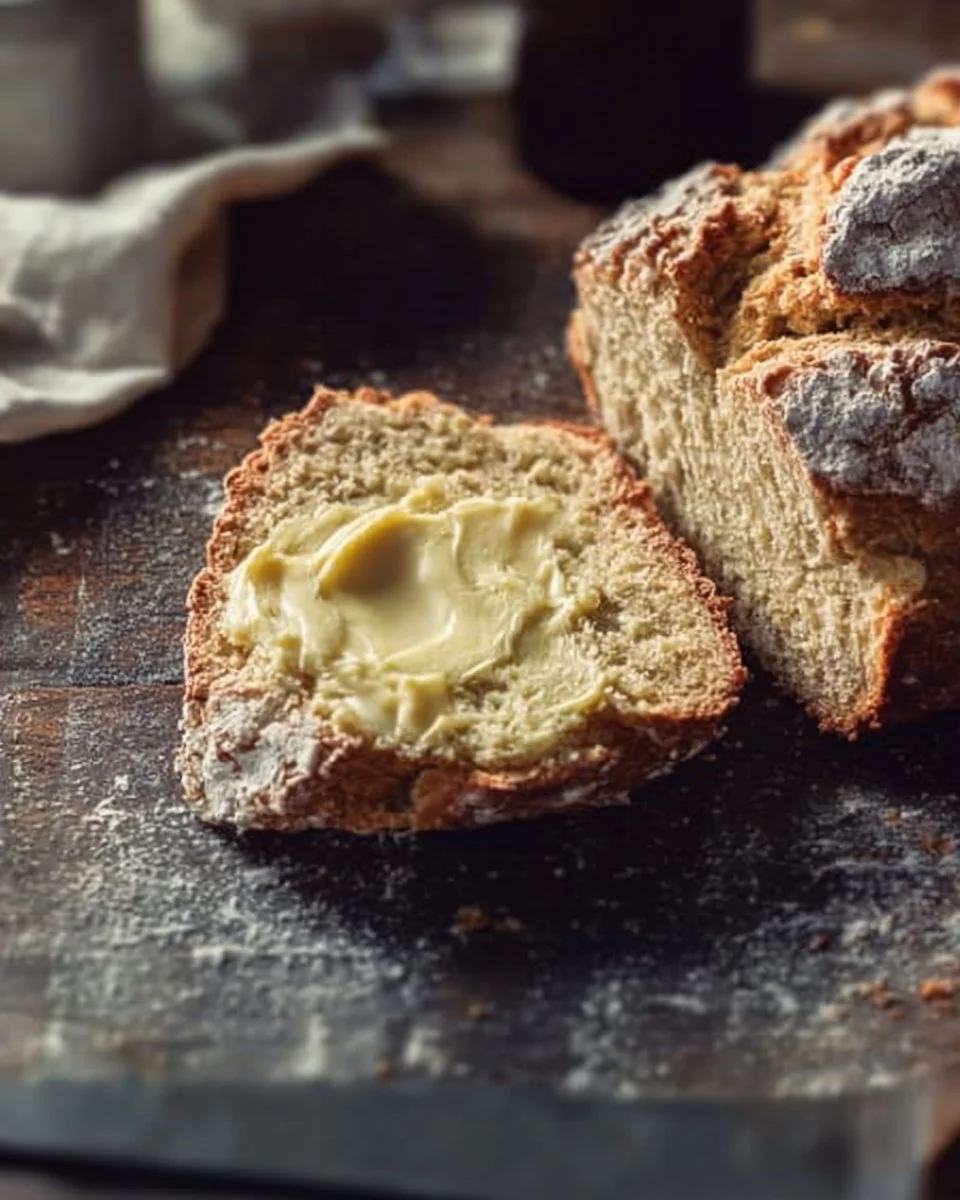
Slice thick and slather with butter for a classic treat. It’s wonderful with sharp cheddar and a bowl of Irish stew, or served alongside smoked salmon and crème fraîche for a brunch twist. For a sweeter pairing, serve with preserves or honey; and if you want another citrusy loaf to contrast the rustic soda bread, try this bright cranberry-orange bread recipe.
Storage and reheating tips
- At room temperature: Wrap the cooled loaf in a clean kitchen towel or place in a paper bag and keep on the counter for up to 2 days. Avoid plastic if you want to preserve crustiness.
- Refrigeration: Not necessary and can dry the bread faster; only refrigerate if your kitchen is very warm (store in an airtight container for up to 4 days).
- Freezing: Slice first, then freeze in a zipper bag for up to 3 months. Reheat slices directly from frozen in a toaster or oven.
- Reheating: Warm whole or sliced bread in a 350°F oven for 8–12 minutes until heated through, or toast slices for a crisp finish. Always cool completely before freezing to avoid condensation.
Pro chef tips
- Measure flour by weight (420 g) to avoid a dense loaf from too much flour.
- Don’t over-knead — four gentle presses are enough. Overworking develops gluten and makes soda bread tough.
- Score the X deeply: it controls where the loaf cracks and helps steam escape.
- Use a preheated baking stone or cast-iron skillet for an extra-crisp base.
- Check doneness with an instant-read thermometer — 200°F in the center indicates done.
Recipe variations
- Raisin and caraway: Fold 1/2 cup raisins and 1 teaspoon caraway seeds into the dough before shaping for a classic Irish twist.
- Whole wheat: Replace up to half the all-purpose flour with whole-wheat flour; add 1–2 tablespoons extra buttermilk if the dough seems dry.
- Savory cheddar-herb: Stir 3/4 cup grated sharp cheddar and 1 tablespoon chopped fresh herbs into the dry mix.
- Gluten-free: Use a tested gluten-free flour blend and add 1 teaspoon xanthan gum; texture will differ but the soda-bread method still works.
Common questions
Q: Can I make this without buttermilk?
A: Yes — mix 1 tablespoon vinegar or lemon juice with 1 1/2 cups milk and let it sit 5–10 minutes. It mimics buttermilk’s acidity to activate the baking soda.
Q: How can I tell when the loaf is fully baked?
A: Tap the bottom of the loaf — it should sound hollow. An internal temperature of about 200°F is a reliable indicator.
Q: Is soda bread the same as Irish brown bread?
A: Not exactly. Irish brown bread often uses wholemeal (whole-wheat) flour and can include different proportions; traditional soda bread is a white, quicker loaf.
Q: Can I add sugar or raisins?
A: Yes. Add up to 2 tablespoons sugar for a slightly sweet loaf, or fold in 1/2 cup raisins or currants for a fruitier version.
Q: What if my crust browns too quickly?
A: Tent the loaf loosely with foil after the first 15 minutes of baking to prevent over-browning while the center finishes.
Q: How long does this keep fresh?
A: Best within 24–48 hours at room temperature. For longer storage, slice and freeze.
Conclusion
If you want to read a traditional take on this classic loaf and compare techniques, this write-up on Traditional Irish Soda Bread is a useful companion. Give this recipe a try the next time you want warm, rustic bread without the wait — it’s quick, honest, and comforting.
PrintTraditional Irish Soda Bread
A quick, yeast-free Irish soda bread that is crusty on the outside and tender on the inside, perfect for casual dinners or brunch.
- Prep Time: 10 minutes
- Cook Time: 40 minutes
- Total Time: 50 minutes
- Yield: 1 loaf
- Category: Bread
- Method: Baking
- Cuisine: Irish
- Diet: Vegetarian
Ingredients
- 3 1/2 cups unbleached all-purpose flour (420 g)
- 3/4 teaspoon kosher salt (3 g)
- 3/4 teaspoon baking soda
- 1 1/2 cups buttermilk (337 g)
Instructions
- Preheat the oven to 450°F and line a baking sheet with parchment paper.
- In a large bowl, whisk the flour, kosher salt, and baking soda until evenly mixed.
- Make a well in the center of the dry ingredients and pour in the buttermilk.
- Stir gently with a wooden spoon until a shaggy dough forms; don’t overmix.
- Turn the dough onto a lightly floured surface and knead gently four times so it holds together.
- Shape the dough into a round loaf and set it on the prepared baking sheet.
- Use a sharp knife to cut a large X into the top to let steam escape and help the loaf rise.
- Bake at 450°F for 15 minutes. Reduce the oven temperature to 400°F and continue baking for 25–30 minutes, until the crust is golden brown and the loaf sounds hollow when tapped.
- Remove from the oven and cool on a wire rack for at least 20 minutes before slicing.
Notes
If you don’t have buttermilk, stir 1 tablespoon white vinegar or lemon juice into milk and let sit 5–10 minutes to thicken. Measure flour by weight for consistent results.