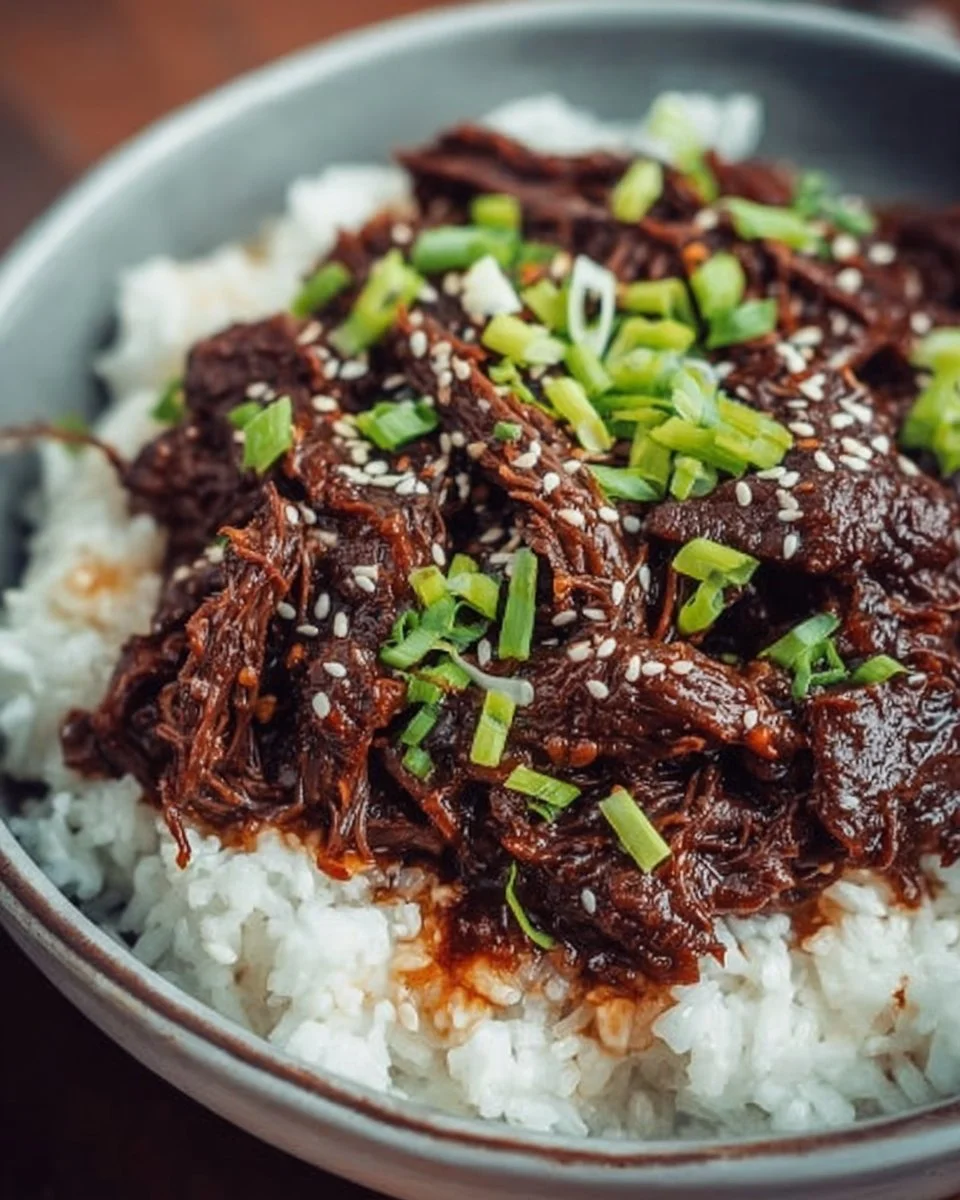
Slow Cooker Korean Beef
I remember the first time I slow-cooked this Korean-style beef: the kitchen smelled like toasted sesame and caramelized soy by the time I pulled the roast apart with two forks. This is a tender, slightly sweet, gently spicy slow cooker chuck roast that tastes like takeout but requires almost zero babysitting. It’s the kind of recipe people make for busy weeknights, potlucks, or any meal where you want big flavor without fuss. If you enjoy hands-off dinners that feed a crowd, compare this to my take on an easy slow cooker Korean beef for another simple approach.
Why you’ll love this dish
This slow cooker Korean beef hits a lot of home-cooked sweet spots: it’s forgiving (use a 3–4 lb chuck roast and the slow cooker does the rest), budget-friendly, and builds deep flavor from just a few pantry staples. The combination of soy, brown sugar, honey, and sesame oil produces that classic Korean-sweet-savory profile while rice vinegar and ginger keep it bright. It’s ideal for busy nights, meal prep, and feeding hungry families—serve it over rice, in lettuce wraps, or pile it on steamed buns.
The cooking process explained
Overview — what happens, step by step:
- Trim the roast and get a flavorful sauce ready by whisking together soy, sweeteners, sesame oil, vinegar, ginger, garlic, and spices.
- Lay thinly sliced onion in the slow cooker, pour some sauce over it, and nestle the roast on top to keep it moist.
- Slow-cook low and slow (or faster on high) until the beef shreds easily.
- Shred the meat, finish by thickening or reducing the sauce if desired, then toss the beef back in to coat.
This gives you a predictable, low-effort workflow: prep the sauce, let the cooker do the work, finish with a quick sauce adjustment.
What you’ll need
- 3–4 lb chuck roast, trimmed of excess fat
- 1/2 cup soy sauce (low sodium preferred)
- 1/4 cup brown sugar, packed
- 1/4 cup honey
- 2 tablespoons sesame oil
- 2 tablespoons rice vinegar
- 1 tablespoon grated fresh ginger
- 2 cloves garlic, minced
- 1 teaspoon red pepper flakes (adjust to taste)
- 1/2 teaspoon black pepper
- 1 medium onion, thinly sliced
- 4 green onions, thinly sliced, for garnish
- Sesame seeds, for garnish
- Cooked rice, for serving
- Optional: Kimchi, for serving
- Optional for thickening: 2 tablespoons cornstarch and 2 tablespoons cold water (cornstarch slurry)
Notes/substitutions: If you don’t have honey, use more brown sugar plus a splash of water. Low-sodium soy is recommended so the sauce doesn’t become overly salty when reduced. For a gluten-free version, swap in tamari.
Step-by-step instructions
- Trim any large chunks of fat from the chuck roast and pat the roast dry. This helps the sauce cling to the meat and prevents greasy pooling.
- In a bowl, whisk together the soy sauce, brown sugar, honey, sesame oil, rice vinegar, grated ginger, minced garlic, red pepper flakes, and black pepper until the sugar dissolves. Taste and adjust heat or sweetness now.
- Scatter the thinly sliced onion across the bottom of the slow cooker and pour half the sauce over the onions so they start to caramelize and flavor the meat.
- Place the roast on top of the onions and pour the remaining sauce over it, making sure the roast is mostly submerged in liquid. Turn the roast once to coat if needed.
- Cover and cook on low for 8–10 hours or on high for 4–5 hours, until the meat is fork-tender and easily shredded. Low-and-slow will yield the most tender, shreddable texture.
- Remove the roast to a cutting board and shred the meat with two forks. If the sauce is thin, thicken it by whisking together 2 tablespoons cornstarch with 2 tablespoons cold water and stirring it into the sauce; cook on the stovetop until glossy and thickened, or reduce the sauce on the stove for 5–10 minutes.
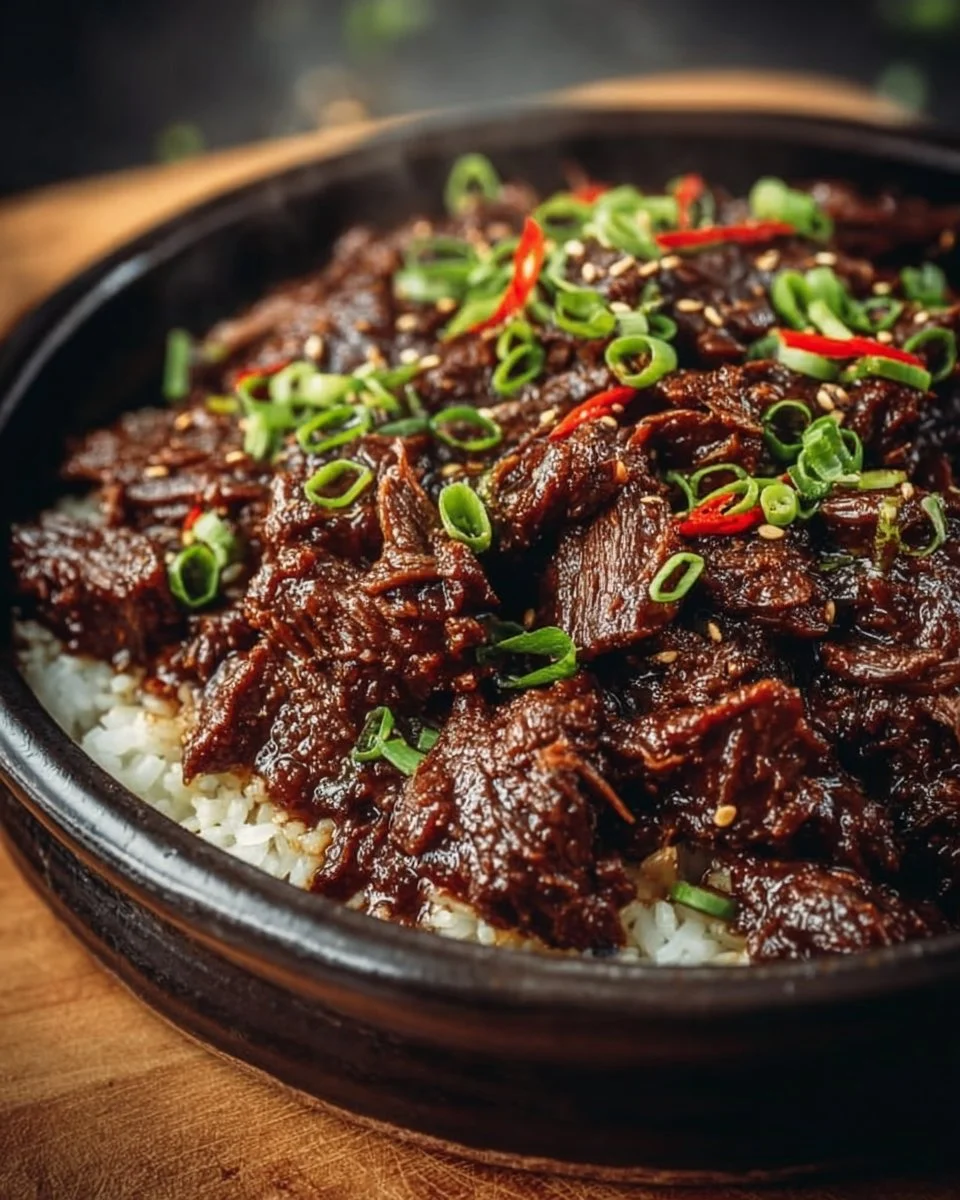
- Return the shredded beef to the slow cooker, stir to coat thoroughly, and let it sit in the warm sauce for a few minutes. Serve over cooked rice and garnish with sliced green onions and sesame seeds.
Best ways to enjoy it
This beef is hugely versatile. Pile it over steamed white or brown rice and spoon extra sauce over the top for a simple bowl. For low-carb eats, serve in lettuce cups with kimchi and cucumber pickles. It also makes terrific tacos or a sloppy-bun style sandwich. If you want a quicker weeknight hack, warm tortillas and top with the beef, sliced green onions, and a squeeze of lime. For inspiration on a ground-meat alternative serving idea, check this tasty Korean ground beef bowl.
Storage and reheating tips
- Refrigerate: Cool leftovers within two hours and store in an airtight container for up to 4 days.
- Freeze: Freeze in portioned containers or zipper bags for up to 3 months. Thaw overnight in the fridge before reheating.
- Reheating: Reheat gently on the stove over low heat with a splash of water or broth to loosen the sauce, or microwave in short bursts, stirring between intervals. If thickened, add a little liquid when reheating to prevent dryness.
- Food safety: Always reheat to 165°F (74°C) for safe consumption. Do not leave cooked beef at room temperature for more than two hours.
Pro chef tips
- Brown for extra depth: Sear the roast briefly on all sides in a hot skillet before adding to the slow cooker. It’s optional, but browning adds caramelized flavor.
- Onion placement matters: Placing the sliced onion under the roast creates a natural rack and transforms into a sweet bed of flavoring that you can spoon over the beef.
- Control the heat: Red pepper flakes provide background warmth—start with less and add more at the end if someone wants it spicier.
- Sauce science: If your sauce tastes too salty after reducing, brighten it with a teaspoon of rice vinegar or a splash of orange juice to balance.
- Make-ahead: The sauce can be mixed up to 24 hours ahead—store covered in the fridge and pour it over the roast right before cooking.
Creative twists
- Bulgogi-style finish: Add a tablespoon of gochujang mixed into the sauce for a deeper, fermented chili profile.
- Hoisin swap: Replace half the brown sugar and honey with hoisin for a richer, sweeter glaze.
- Slow-cooker to Instant Pot: Cook on high pressure for about 60–75 minutes with a natural release if you need it faster. (Follow your Instant Pot manual for liquid minimums.)
- Veggie add-ins: Add carrots and baby potatoes for the last 2–3 hours of low cooking—root vegetables soak up the sauce and make it a one-pot meal.
- Make it smoky: Stir in a teaspoon of smoked paprika or a few drops of liquid smoke if you like a barbecue edge.
Common questions
Q: Can I use a different cut of beef?
A: Yes. Chuck roast is ideal because of its marbling and connective tissue that break down into silky strands. Brisket will also work but may need slightly longer; round or sirloin will be leaner and can dry out if overcooked.
Q: Is this dish very spicy?
A: Not necessarily. The recipe uses red pepper flakes for gentle heat—adjust them to taste or omit entirely for kid-friendly versions. Gochujang or extra chili will increase spiciness.
Q: How do I thicken the sauce without cornstarch?
A: Reduce the sauce on the stovetop until it thickens; or whisk in a small amount of arrowroot (same ratio as cornstarch) or a tablespoon of tomato paste for body.
Q: Can I make this in an Instant Pot or on the stove?
A: Yes. For an Instant Pot, cook on high pressure for about 60–75 minutes with natural release. On the stovetop, simmer covered on very low for 3–4 hours until fork-tender, checking liquid levels periodically.
Q: How long does it keep in the fridge?
A: Store in an airtight container for up to 4 days. Freeze for up to 3 months.
Q: Any tips for serving to picky eaters?
A: Serve sauce on the side so people can control sweetness and spice, and offer plain rice or steamed vegetables alongside.
Conclusion
If you want an easy, hands-off dinner that tastes like a restaurant favorite, this slow cooker Korean beef delivers with minimal effort and maximum flavor. For another slow-cooker take and a helpful comparison, see this closely related version at Slow Cooker Korean Beef – I Heart Eating.
PrintSlow Cooker Korean Beef
A tender, slightly sweet, gently spicy slow cooker chuck roast that tastes like takeout with minimal effort.
- Prep Time: 15 minutes
- Cook Time: 480 minutes
- Total Time: 495 minutes
- Yield: 6 servings
- Category: Main Course
- Method: Slow Cooking
- Cuisine: Korean
- Diet: Dairy-Free, Gluten-Free
Ingredients
- 3–4 lb chuck roast, trimmed of excess fat
- 1/2 cup soy sauce (low sodium preferred)
- 1/4 cup brown sugar, packed
- 1/4 cup honey
- 2 tablespoons sesame oil
- 2 tablespoons rice vinegar
- 1 tablespoon grated fresh ginger
- 2 cloves garlic, minced
- 1 teaspoon red pepper flakes (adjust to taste)
- 1/2 teaspoon black pepper
- 1 medium onion, thinly sliced
- 4 green onions, thinly sliced, for garnish
- Sesame seeds, for garnish
- Cooked rice, for serving
- Optional: Kimchi, for serving
- Optional for thickening: 2 tablespoons cornstarch and 2 tablespoons cold water (cornstarch slurry)
Instructions
- Trim any large chunks of fat from the chuck roast and pat it dry.
- In a bowl, whisk together the soy sauce, brown sugar, honey, sesame oil, rice vinegar, grated ginger, minced garlic, red pepper flakes, and black pepper until the sugar dissolves.
- Scatter the thinly sliced onion across the bottom of the slow cooker and pour half the sauce over it.
- Place the roast on top of the onions and pour the remaining sauce over the roast.
- Cover and cook on low for 8–10 hours or on high for 4–5 hours, until the meat is fork-tender.
- Remove the roast and shred the meat with two forks. Thicken the sauce if desired and return the shredded beef to the slow cooker, stirring to coat.
- Serve over cooked rice, garnished with sliced green onions and sesame seeds.
Notes
For a gluten-free version, swap in tamari. Leftovers can be stored in an airtight container for up to 4 days, or frozen for up to 3 months.